In today’s rapidly changing workplace, soft skills are just as important as technical skills. Soft skills are those personal attributes and interpersonal abilities that enable individuals to interact effectively with others and succeed in their roles. As we approach 2025, it’s essential to identify and develop the soft skills that will be most in demand in the upcoming years.
The increasing globalization of the economy and the rise of remote work have made it more important than ever to be able to communicate effectively with people from diverse cultural and professional background. Soft skills such as active listening, empathy, and cultural sensitivity will be crucial for building strong working relationships and fostering collaboration in a hybrid work environment.
In today’s competitive job market, soft skills are essential for career success. Here are 9 important soft skills that will be in high demand in 2025:
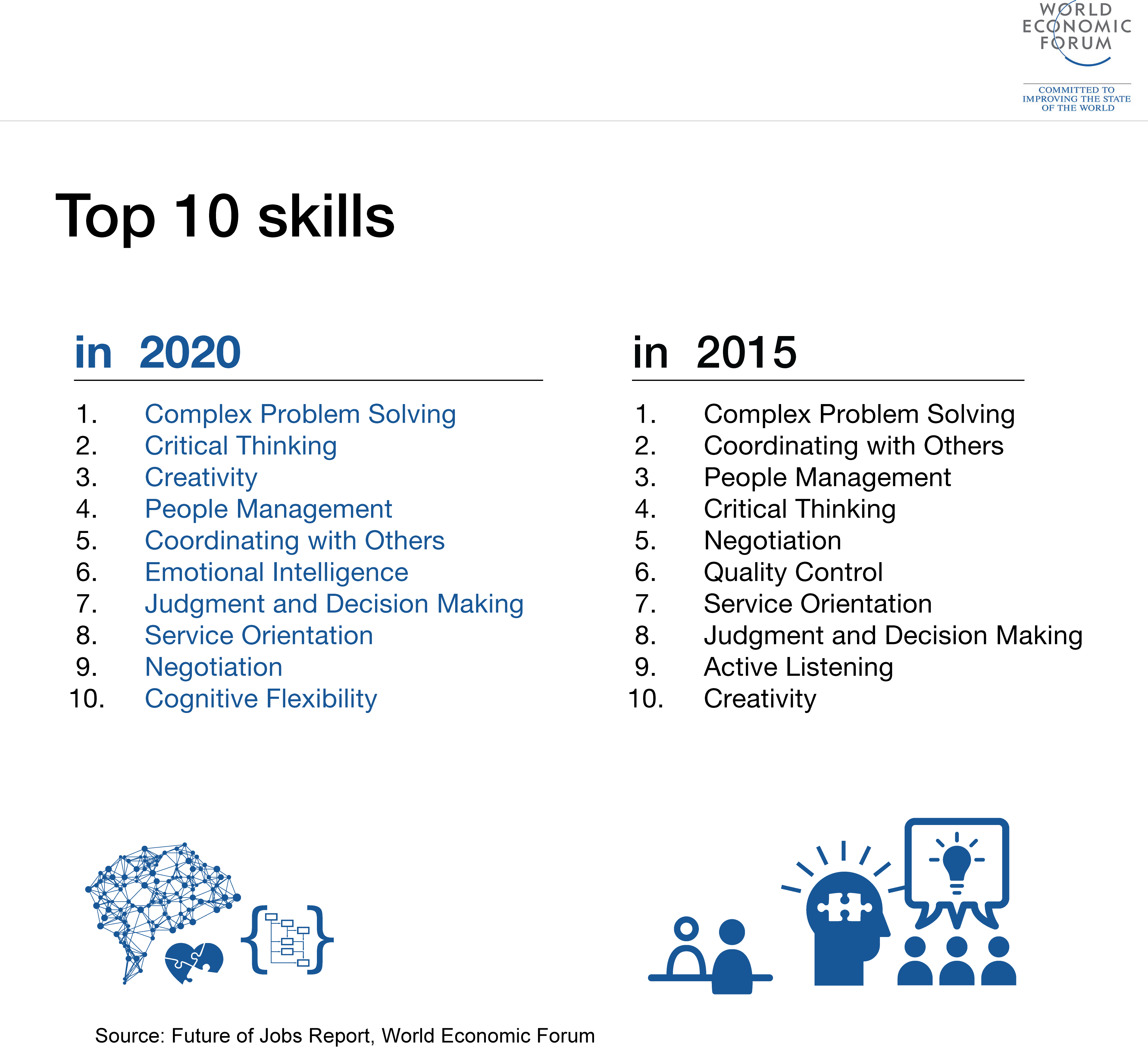
These skills are essential for success in any industry or role. By developing these skills, you can increase your employability and career advancement opportunities.

Communication is the ability to effectively convey information, ideas, and emotions to others. It involves both verbal and nonverbal skills, and it is essential for success in any field.

Active listening is the ability to pay attention to what others are saying, both verbally and nonverbally. It involves making eye contact, nodding, and asking clarifying questions. Active listening shows that you are engaged in the conversation and that you value what the other person has to say.
![Key Skills For a Resume [Best List of Examples & How to] (2025)](https://jofibostorage.blob.core.windows.net/blog/soft-skills-for-your-resume-infographic.jpg)
Clear and concise speech is the ability to speak in a way that is easy to understand. It involves using simple language, avoiding jargon, and organizing your thoughts in a logical way. Clear and concise speech helps to ensure that your message is communicated effectively.
![Top Soft Skills for 2025 [90+ Examples for Your Resume]](https://cdn-blog.novoresume.com/articles/soft-skills/soft-skills.png)
Effective writing is the ability to write in a way that is clear, concise, and persuasive. It involves using correct grammar and punctuation, and it also involves organizing your thoughts in a logical way. Effective writing is essential for communicating your ideas in a professional setting.
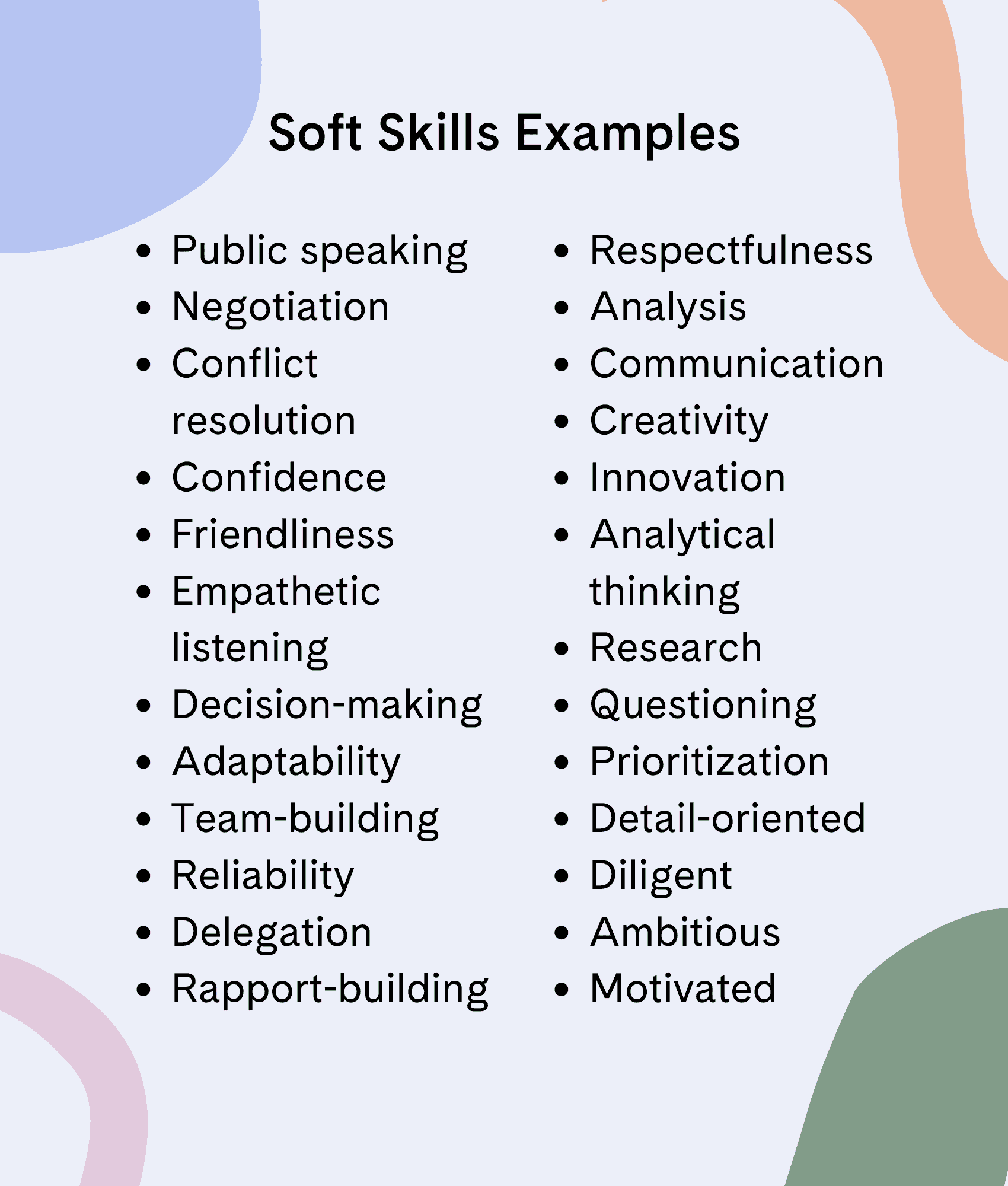
Nonverbal communication is the ability to communicate through body language, facial expressions, and eye contact. It is an important part of communication, as it can convey emotions and messages that words cannot. Nonverbal communication can also be used to build rapport and trust.
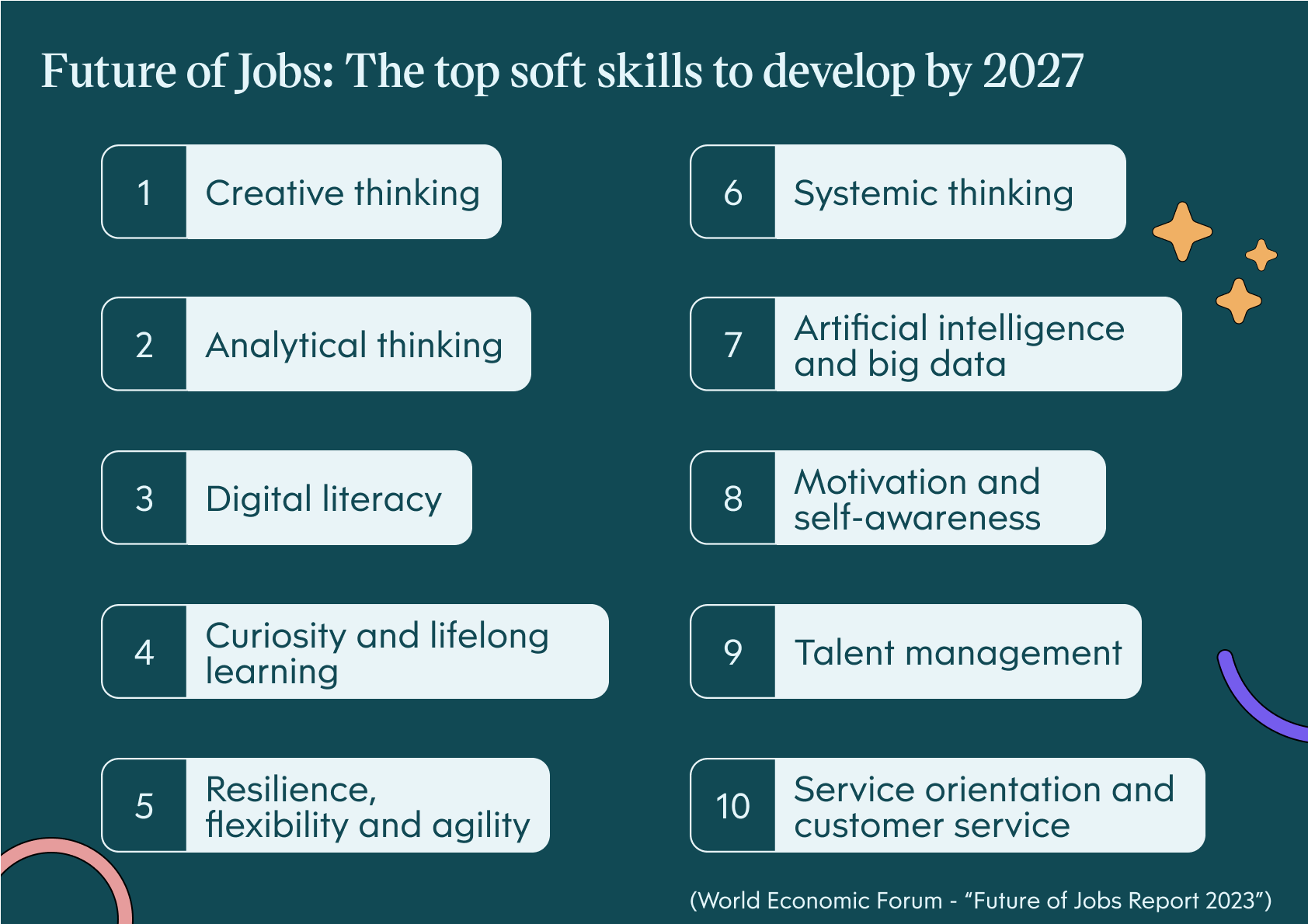
These are just a few of the important aspects of communication. By developing your communication skills, you can increase your effectiveness in all areas of your life.
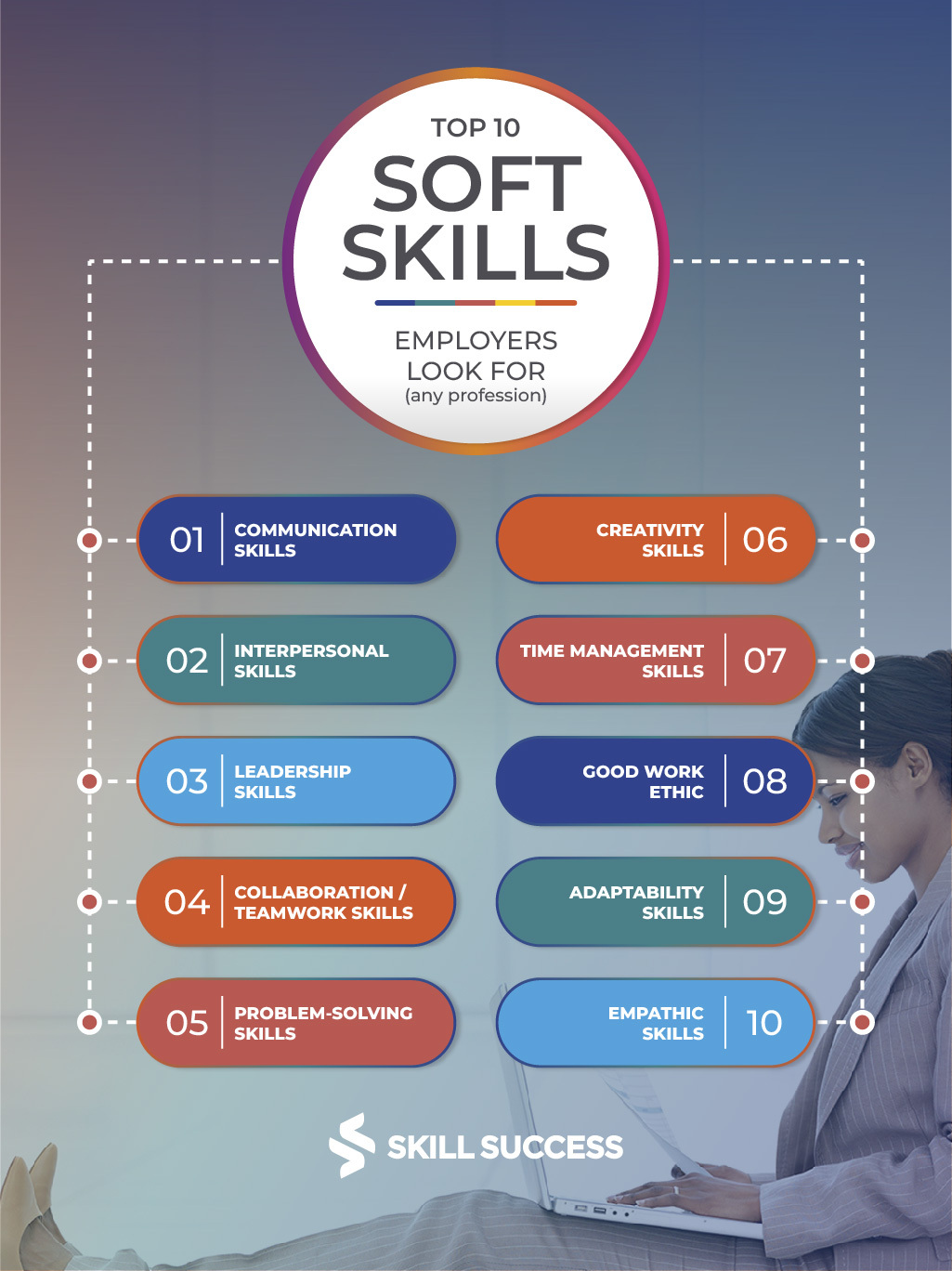
Teamwork is the ability to work effectively with others to achieve a common goal. It involves being able to communicate effectively, cooperate, and compromise. Teamwork is essential for success in any workplace, as it allows teams to pool their knowledge and skills to achieve more than they could individually.
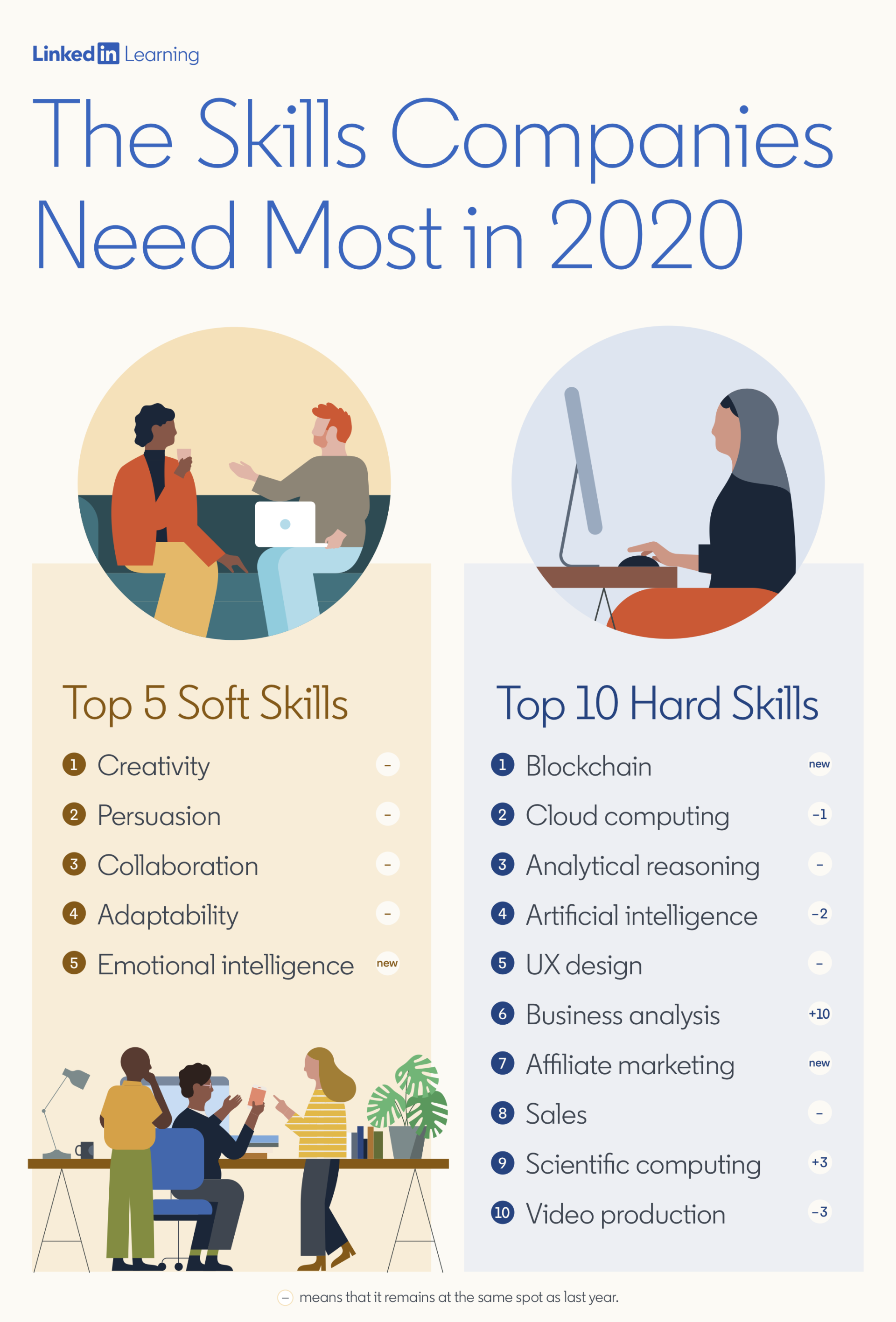
Teamwork is a complex skill that takes time and practice to develop. However, it is an essential skill for success in any workplace. By developing your teamwork skills, you can increase your effectiveness as a team member and contribute to the success of your team.
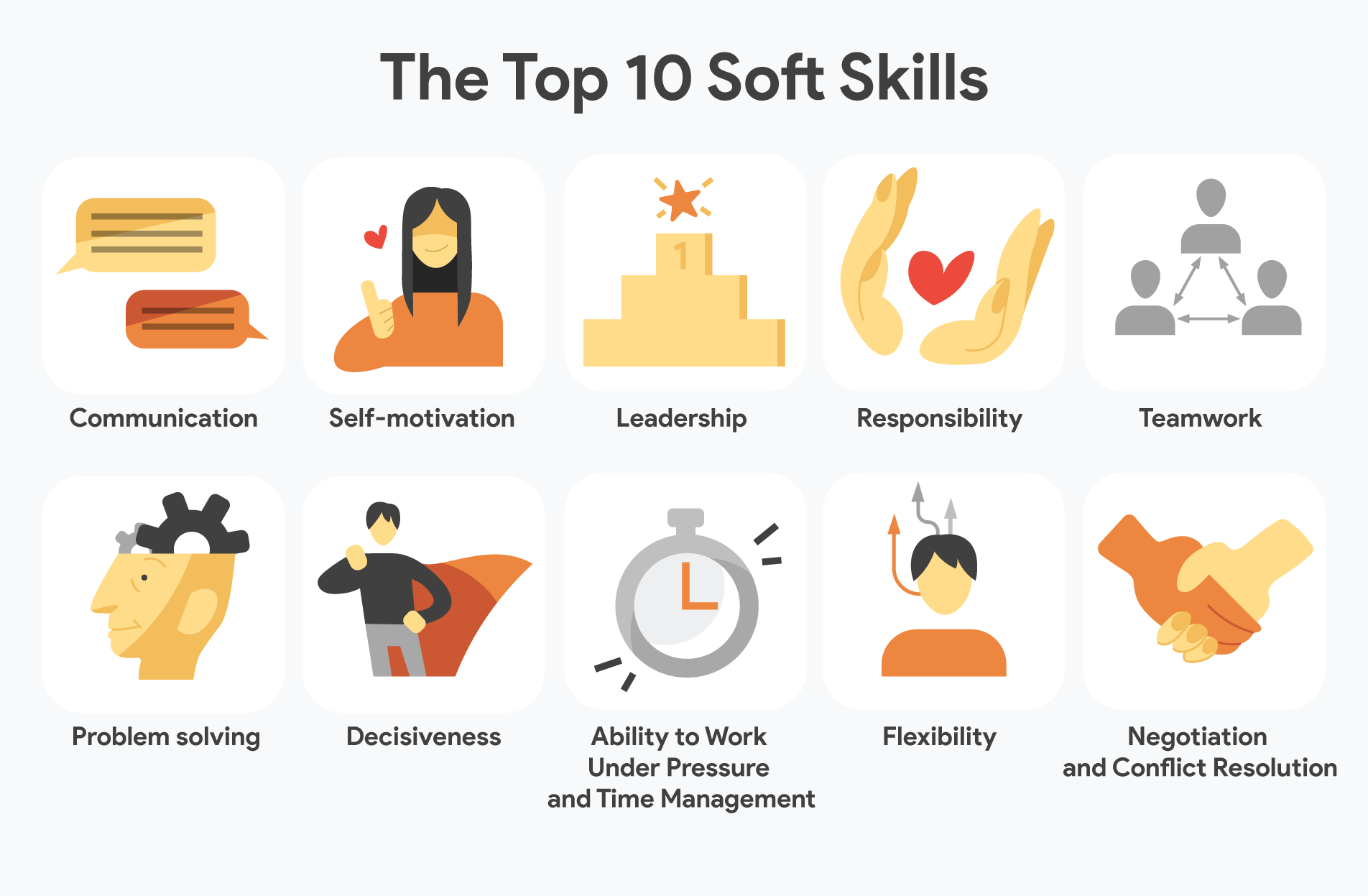
In addition to the above, teamwork also involves being able to manage conflict and resolve disagreements. Conflict is a natural part of any team environment, and it is important to be able to manage it in a constructive way. By developing your conflict management skills, you can help to ensure that your team is able to work together effectively and achieve its goals.
Problem-solving is the ability to identify, analyze, and solve problems. It involves being able to think critically, creatively, and strategically. Problem-solving is an essential skill for success in any field, as it allows you to overcome challenges and achieve your goals.
The first step to solving a problem is to identify it clearly. This involves understanding the nature of the problem, its causes, and its impact. Once you have a clear understanding of the problem, you can begin to develop solutions.
Once you have identified the problem, you need to analyze it in order to understand its root cause. This involves breaking the problem down into its component parts and examining the relationships between them. By understanding the root cause of the problem, you can develop more effective solutions.
Once you have analyzed the problem, you can begin to generate solutions. This involves brainstorming a variety of possible solutions and evaluating their pros and cons. It is important to be creative and open-minded when generating solutions, as the best solution may not be the most obvious one.
Once you have selected a solution, you need to implement it. This involves taking action to put the solution into practice. It is important to monitor the implementation of the solution and make adjustments as needed.
Problem-solving is a complex skill that takes time and practice to develop. However, it is an essential skill for success in any field. By developing your problem-solving skills, you can increase your effectiveness and achieve your goals.
Creativity is the ability to generate new ideas and solutions. It involves thinking outside the box and coming up with new and innovative ways to approach problems. Creativity is an essential skill for success in any field, as it allows you to develop new products and services, improve processes, and find new ways to solve problems.
Creativity is a complex skill that takes time and practice to develop. However, it is an essential skill for success in any field. By developing your creativity, you can increase your effectiveness and achieve your goals.
In addition to the above, creativity also involves being able to collaborate with others and share ideas. Creativity is not just about coming up with new ideas, but also about being able to develop and implement those ideas. By working with others, you can increase your creativity and achieve more than you could on your own.
Creativity is an essential skill for the 21st century workplace. As the world becomes increasingly complex and interconnected, we need to be able to think creatively and come up with new solutions to the challenges we face. By developing your creativity, you can increase your employability and career advancement opportunities.
Emotional intelligence (EI) is the ability to understand, use, and manage your own emotions in positive ways to relieve stress, communicate effectively, empathize with others, overcome challenges, and defuse conflict. It also involves the ability to understand and respond to the emotions of others.
EI is a complex skill that takes time and practice to develop. However, it is an essential skill for success in any field. By developing your EI, you can increase your effectiveness and achieve your goals.
In addition to the above, EI also involves being able to manage conflict and resolve disagreements. EI is not just about being nice to others, but also about being able to stand up for yourself and assert your needs. By developing your EI, you can increase your ability to handle conflict and build stronger relationships.
EI is an essential skill for the 21st century workplace. As the world becomes increasingly complex and interconnected, we need to be able to understand and manage our own emotions and the emotions of others. By developing your EI, you can increase your employability and career advancement opportunities.
Adaptability is the ability to adjust to new or changing circumstances. It involves being able to learn new skills, change your approach, and think on your feet. Adaptability is an essential skill for success in any field, as it allows you to respond to change and thrive in uncertain environments.
Adaptability is a complex skill that takes time and practice to develop. However, it is an essential skill for success in any field. By developing your adaptability, you can increase your effectiveness and achieve your goals.
In addition to the above, adaptability also involves being able to work in a team environment and collaborate with others. Adaptability is not just about being able to change your own approach, but also about being able to work with others to adapt to change. By developing your adaptability, you can increase your ability to work in a team and achieve common goals.
Adaptability is an essential skill for the 21st century workplace. As the world becomes increasingly complex and interconnected, we need to be able to adapt to change and thrive in uncertain environments. By developing your adaptability, you can increase your employability and career advancement opportunities.
Time management is the ability to plan and control your time effectively. It involves being able to set priorities, delegate tasks, and manage your time wisely. Time management is an essential skill for success in any field, as it allows you to get more done in less time and reduce stress.
Time management is a complex skill that takes time and practice to develop. However, it is an essential skill for success in any field. By developing your time management skills, you can increase your effectiveness and achieve your goals.
In addition to the above, time management also involves being able to manage distractions and interruptions. Time management is not just about planning your time, but also about being able to stay focused and get work done. By developing your time management skills, you can increase your ability to focus and achieve your goals.
Time management is an essential skill for the 21st century workplace. As the world becomes increasingly complex and interconnected, we need to be able to manage our time effectively and get more done in less time. By developing your time management skills, you can increase your employability and career advancement opportunities.
Leadership is the ability to inspire and guide others to achieve a common goal. It involves being able to motivate, communicate, and delegate effectively. Leadership is an essential skill for success in any field, as it allows you to build strong teams and achieve great things.
Leaders are able to inspire others to follow them and work towards a common goal. They do this by creating a vision for the future and motivating others to believe in it.
Leaders are able to communicate effectively with others. They are able to clearly articulate their vision and goals, and they are able to listen to and understand the needs of their followers.
Leaders are able to delegate effectively. They are able to trust others to complete tasks and they are able to provide clear instructions and support.
Leaders are able to build strong teams. They are able to create a positive and supportive work environment, and they are able to motivate and inspire their teams to achieve great things.
Leadership is a complex skill that takes time and practice to develop. However, it is an essential skill for success in any field. By developing your leadership skills, you can increase your effectiveness and achieve your goals.
Conflict resolution is the ability to manage and resolve conflict in a positive and constructive way. It involves being able to identify the root cause of the conflict, communicate effectively with others, and find a solution that meets the needs of all parties involved.
The first step to resolving conflict is to identify the root cause of the conflict. This involves understanding the underlying needs and interests of all parties involved.
Conflict resolution requires effective communication. This involves being able to listen to and understand the needs of others, and being able to express your own needs and interests in a clear and respectful way.
Once the root cause of the conflict has been identified, the next step is to find a solution that meets the needs of all parties involved. This may involve compromise and negotiation.
Once a solution has been found, it is important to implement it in a timely and effective manner. This may involve setting clear expectations and monitoring progress.
Conflict resolution is a complex skill that takes time and practice to develop. However, it is an essential skill for success in any field. By developing your conflict resolution skills, you can increase your effectiveness and achieve your goals.
Question 1: What are the top soft skills for 2025?
Answer 1: The top soft skills for 2025 are communication, teamwork, problem-solving, creativity, emotional intelligence, adaptability, time management, leadership, and conflict resolution.
Question 2: Why are soft skills important?
Answer 2: Soft skills are important because they allow you to interact effectively with others, build strong relationships, and achieve your goals. They are essential for success in any field.
Question 3: How can I develop my soft skills?
Answer 3: There are many ways to develop your soft skills. You can take courses, read books, or practice your skills in everyday situations. You can also seek feedback from others and ask for help when you need it.
Question 4: What are the benefits of developing my soft skills?
Answer 4: Developing your soft skills can lead to many benefits, including increased productivity, improved relationships, and greater career success.
Question 5: How can I use my soft skills to succeed in my career?
Answer 5: You can use your soft skills to succeed in your career by building strong relationships with your colleagues, communicating effectively with your superiors, and solving problems creatively.
Question 6: What are some tips for developing my soft skills?
Answer 6: Some tips for developing your soft skills include being open to feedback, practicing your skills in everyday situations, and seeking out opportunities to learn and grow.
Question 7: How can I assess my soft skills?
Answer 7: You can assess your soft skills by asking for feedback from others, taking personality assessments, or observing your own behavior in different situations.
Question 8: What are some resources that can help me develop my soft skills?
Answer 8: There are many resources available to help you develop your soft skills, including books, articles, online courses, and workshops.
Question 9: How can I stay up-to-date on the latest soft skills trends?
Answer 9: You can stay up-to-date on the latest soft skills trends by reading industry publications, attending conferences, and networking with other professionals.
Developing your soft skills is an investment in your future success. By investing in your soft skills, you can increase your productivity, improve your relationships, and achieve your career goals.
Feedback is essential for developing your soft skills. It allows you to identify areas where you need to improve and make changes accordingly. Be open to receiving feedback from others, even if it is negative. Take the time to reflect on the feedback and consider how you can use it to improve your skills.
The best way to develop your soft skills is to practice them in everyday situations. This could involve communicating effectively with your colleagues, solving problems creatively, or managing your time wisely. The more you practice your skills, the better you will become at them.
There are many opportunities to learn and grow your soft skills. You can take courses, read books, or attend workshops. You can also volunteer your time or shadow someone who is good at a particular skill. Take advantage of any opportunity to learn and grow.
Developing soft skills takes time and effort. Don’t get discouraged if you don’t see results immediately. Just keep practicing and you will eventually see improvement. Be patient and persistent, and you will achieve your goals.
By following these tips, you can develop your soft skills and achieve greater success in your personal and professional life.
Developing your soft skills is an essential investment in your future success. By investing in your soft skills, you can increase your productivity, improve your relationships, and achieve your career goals.
In today’s competitive job market, soft skills are more important than ever before. The top soft skills for 2025 include communication, teamwork, problem-solving, creativity, emotional intelligence, adaptability, time management, leadership, and conflict resolution. By developing these skills, you can increase your productivity, improve your relationships, and achieve your career goals.
Developing your soft skills is an investment in your future success. It takes time and effort, but it is worth it. By investing in your soft skills, you are investing in your ability to succeed in any field or industry.
The future of work is uncertain, but one thing is for sure: soft skills will be in high demand. By developing your soft skills, you can prepare yourself for the future and achieve your goals.
I encourage you to start developing your soft skills today. Take courses, read books, or practice your skills in everyday situations. The more you invest in your soft skills, the greater your success will be.